
In today’s fast-paced digital world, customer expectations are higher than ever. Whether visiting a bank, hospital, government office, retail store, or service center, customers expect quick service and minimal waiting times. Long queues not only frustrate customers but can also negatively impact a business’s reputation, efficiency, and profitability.
To address these challenges, organizations across the globe are adopting advanced Queue Management Systems that streamline customer flow, reduce waiting times, and improve overall service delivery. These systems have become an essential component of modern customer experience strategies.
In Saudi Arabia, where digital transformation is accelerating under Vision 2030, queue management solutions are increasingly being implemented across both public and private sectors. Businesses and institutions are investing in smart technologies that improve operational performance while enhancing customer satisfaction.
This article explores the importance of queue management systems, their benefits, applications, and growing adoption in Riyadh and across Saudi Arabia.
Understanding Modern Customer Service Challenges
Managing customer flow efficiently has become a significant challenge for many organizations.
Common issues include:
- Long waiting times
- Overcrowded service areas
- Customer dissatisfaction
- Reduced employee productivity
- Inefficient resource allocation
- Poor service experiences
Without an organized system, businesses often struggle to handle customer demand effectively.
A queue management system provides a structured solution that improves both customer experience and operational efficiency.
Queue Management System
What Is a Queue Management System?
A Queue Management System is a technology-based solution designed to organize, monitor, and manage customer queues efficiently.
The system helps businesses control customer flow by assigning queue numbers, directing customers to available service points, and providing real-time information regarding waiting times.
Modern queue management systems often integrate with digital displays, kiosks, mobile applications, and analytics tools to create a seamless customer experience.
Core Components of a Queue Management System
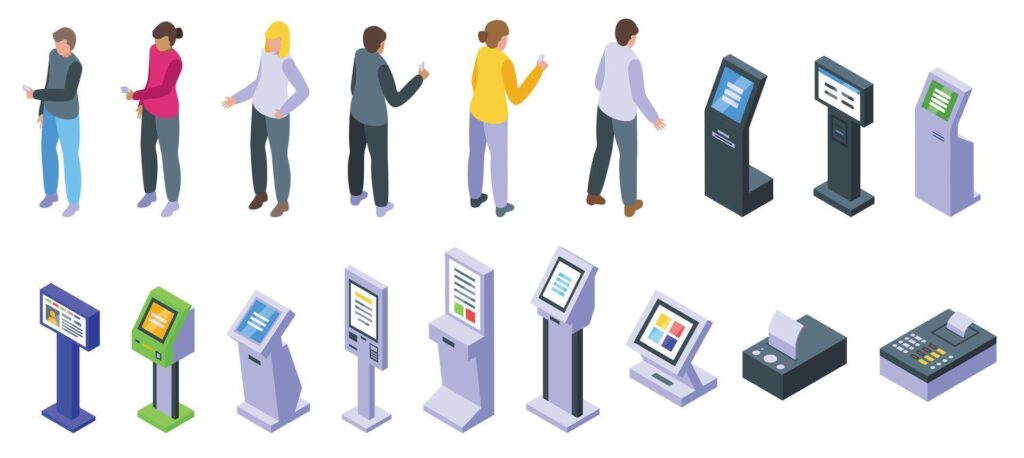
Customer Check-In Kiosk
Allows customers to register and obtain queue tickets.
Digital Display Screens
Display ticket numbers and service information.
Service Counter Integration
Connects customers with available staff members.
Mobile Queue Solutions
Enable virtual queue management through smartphones.
Reporting and Analytics
Provide valuable insights into customer flow and staff performance.
Appointment Scheduling
Allows customers to book services in advance.
How a Queue Management System Works
The process is simple and efficient:
- Customer arrives at the facility.
- Customer receives a queue ticket.
- The system places the customer in the appropriate queue.
- Digital displays provide updates.
- The next available staff member serves the customer.
- Performance data is recorded for analysis.
This automated process eliminates confusion and improves service delivery.
Benefits of a Queue Management System
Reduced Waiting Times
Customers are served more efficiently.
Improved Customer Satisfaction
Organized service enhances the overall experience.
Better Resource Allocation
Managers can distribute staff effectively.
Increased Productivity
Employees spend less time managing queues manually.
Enhanced Customer Communication
Real-time updates keep customers informed.
Valuable Business Insights
Analytics help optimize operations and staffing.
Why Queue Management Systems Are Essential Today
Customer experience has become a major competitive advantage.
Organizations that effectively manage queues benefit from:
- Stronger customer loyalty
- Better service quality
- Improved operational efficiency
- Increased customer retention
- Enhanced brand reputation
Modern consumers value convenience, and queue management systems help businesses meet these expectations.
Industries That Use Queue Management Systems
Queue management solutions are widely used across multiple sectors.
Healthcare Facilities
Hospitals and clinics use queue systems to organize patient flow.
Banks and Financial Institutions
Banks manage customer transactions efficiently through digital queue solutions.
Government Offices
Government service centers use queue management to improve public services.
Retail Stores
Retailers streamline customer service and checkout processes.
Telecommunications Companies
Service centers manage customer appointments and support requests.
Educational Institutions
Universities and schools use queue systems for administrative services.
Queue Management System in Riyadh
Riyadh is the economic and administrative center of Saudi Arabia. As the city continues to grow, organizations are increasingly investing in digital technologies that improve customer service and operational efficiency.
As a result, demand for Queue Management System in Riyadh has increased significantly.
Why Riyadh Businesses Need Queue Management Systems
High Customer Traffic
Large organizations handle thousands of visitors daily.
Smart City Development
Riyadh is embracing digital transformation initiatives.
Government Modernization
Public institutions are improving service delivery.
Corporate Growth
Businesses require scalable customer management solutions.
Benefits for Organizations in Riyadh
Faster Customer Processing
Queue systems reduce congestion and delays.
Enhanced Service Quality
Customers enjoy a more organized experience.
Better Employee Utilization
Staff can focus on service rather than queue control.
Data-Driven Decisions
Managers gain valuable operational insights.
Applications in Riyadh
Queue management systems are commonly used in:
- Hospitals
- Banks
- Government service centers
- Retail outlets
- Telecom branches
- Educational institutions
These organizations rely on efficient customer flow management to maintain high service standards.
Queue Management System in Saudi Arabia
Saudi Arabia is rapidly transforming into a digitally driven economy. Vision 2030 emphasizes innovation, automation, and improved public services.
Consequently, the adoption of Queue Management System in Saudi Arabia continues to expand across multiple industries.
Why Queue Management Systems Are Growing in Saudi Arabia
Vision 2030 Objectives
Supports digital transformation initiatives.
Customer-Centric Service Models
Organizations prioritize customer satisfaction.
Increased Urbanization
Growing populations create higher service demands.
Technology Adoption
Businesses are investing in smart solutions.
Government Efficiency Programs
Public sector organizations are modernizing operations.
Key Benefits for Saudi Organizations
Improved Customer Experience
Customers receive faster and more organized service.
Operational Excellence
Processes become more efficient and predictable.
Reduced Congestion
Service areas remain organized and manageable.
Better Performance Monitoring
Real-time analytics support continuous improvement.
Competitive Advantage
Organizations differentiate themselves through superior service delivery.
Emerging Trends in Queue Management Technology
The future of queue management systems is driven by innovation.
Artificial Intelligence
AI helps predict customer demand and optimize staffing.
Virtual Queuing
Customers can join queues remotely using mobile devices.
Mobile Notifications
Real-time alerts keep customers informed.
Cloud-Based Systems
Enable centralized management across multiple locations.
Integration with CRM Systems
Provides personalized customer experiences.
Advanced Analytics
Organizations gain deeper insights into customer behavior.
How Queue Management Systems Support Digital Transformation
Digital transformation is about improving efficiency through technology.
Queue management systems contribute by:
- Automating routine processes
- Reducing manual interventions
- Enhancing customer experiences
- Improving operational visibility
- Supporting data-driven decision-making
These benefits align closely with modern business objectives and national digital transformation strategies.
Factors to Consider When Choosing a Queue Management System
Organizations should evaluate:
Scalability
The system should support future growth.
User-Friendly Design
Both customers and staff should find it easy to use.
Integration Capabilities
Compatibility with existing business systems is essential.
Reporting Features
Comprehensive analytics support optimization efforts.
Technical Support
Reliable support ensures continuous operation.
The NextGen Technologies: Delivering Innovative Queue Management Solutions
The NextGen Technologies
The NextGen Technologies is a trusted provider of advanced business technology solutions, helping organizations improve operational efficiency through innovative digital systems.
The company specializes in delivering modern queue management solutions designed to streamline customer flow, reduce waiting times, and enhance service quality across various industries.
With a strong focus on innovation, automation, and customer experience, The NextGen Technologies supports businesses and institutions throughout Saudi Arabia in achieving their digital transformation goals.
By implementing intelligent queue management systems, organizations can improve productivity, optimize resource utilization, and provide exceptional customer service.
Conclusion
A Queue Management System has become an essential tool for organizations seeking to improve customer experiences and operational efficiency. By automating customer flow management, reducing waiting times, and providing valuable insights, these systems help businesses deliver higher-quality services while optimizing resources.
The growing demand for Queue Management System in Riyadh and Queue Management System in Saudi Arabia reflects the country’s commitment to innovation, digital transformation, and customer-centric service delivery.
As businesses and institutions continue to modernize, queue management solutions will play a critical role in enhancing service efficiency and meeting the expectations of today’s customers.
Organizations partnering with experienced providers like The NextGen Technologies can successfully implement future-ready queue management systems that support long-term growth and operational excellence.
Frequently Asked Questions (FAQs)
1. What is a Queue Management System?
A Queue Management System is a technology solution that organizes customer flow, reduces waiting times, and improves service efficiency.
2. Which industries benefit from queue management systems?
Healthcare, banking, government services, retail, telecommunications, and education sectors commonly use queue management systems.
3. Why are queue management systems important in Riyadh?
Riyadh experiences high customer traffic, making efficient service management essential for businesses and public institutions.
4. How do queue management systems support Saudi Arabia’s Vision 2030?
They contribute to digital transformation by improving operational efficiency, customer satisfaction, and service automation.
5. Why choose The NextGen Technologies for queue management solutions?
The NextGen Technologies provides innovative, scalable, and customer-focused queue management systems that help organizations improve efficiency and enhance service delivery.


